2026-05-02
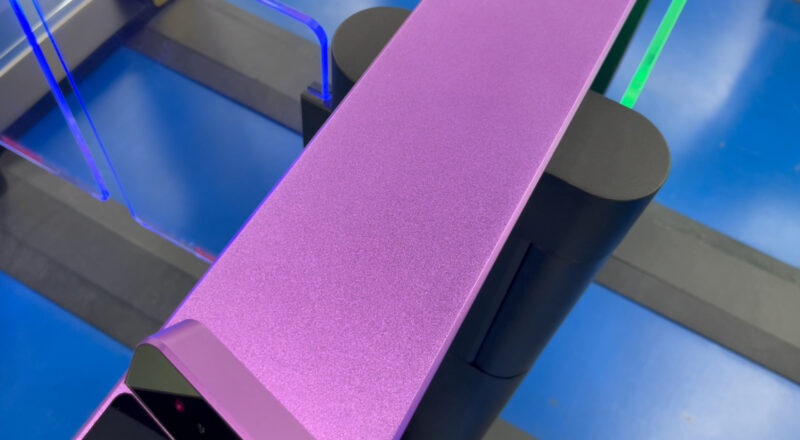
The right turnstile surface finish depends on three things: the base material, the desired appearance and the installation environment. Brushed stainless steel provides a visible metal texture; powder coating offers a wider choice of solid colors; and anodizing creates a finished surface on aluminum components. None should be selected by color alone.
A turnstile cabinet is touched, cleaned and viewed at close range every day. Its finish affects the first impression of an entrance, but also how the surface performs after fabrication and during routine maintenance.
| Finish | Suitable base material | Typical appearance | Key specification point |
| Brushed or satin finish | Stainless steel | Visible metal grain; low to moderate reflection | Define the finish quality, grain direction and treatment of welds |
| Polished finish | Stainless steel | Smoother, more reflective metal surface | Consider fingerprints, visibility of marks and cleaning |
| Powder coating | Compatible metal cabinet or component | Solid colors, including matte and textured looks | Specify pretreatment, coating system and intended environment |
| Anodizing | Aluminum | Metallic or colored aluminum finish | Specify finish class, color and suitability for the site |
These are finish families, not interchangeable treatments. Anodizing is a process for aluminum; it should not be described as an anodized finish on a stainless steel cabinet. The Aluminum Anodizers Council describes anodizing as an electrochemical process that forms an oxide finish on aluminum. Aluminum Anodizers Council
Brushed stainless steel is a familiar choice for office lobbies, transport entrances and other commercial spaces. The grain gives the cabinet a clear metal character without the stronger reflections of a mirror polish.
For specification purposes, “brushed” is only a starting point. Ask how the grain direction will align across the top cover, side panels and adjacent cabinets. Also review edges, corners and welded areas. Stainless steel industry guidance notes that finish quality and surface roughness matter, particularly where salt deposits may contribute to coastal staining. assda.asn.au
Good fit: Projects that want a visible stainless steel appearance and can follow a suitable cleaning routine.
A polished surface can make stainless steel look brighter and more formal. Smoother surfaces may also be easier to keep free of retained deposits than rougher finishes, which is relevant when assessing corrosion appearance in demanding environments. assda.asn.au
The visual tradeoff is that reflections, fingerprints and marks may be more noticeable under some lighting. Before choosing a polished finish for an entire row of turnstiles, inspect a physical sample under lighting similar to the actual entrance.
Good fit: Entrances where a reflective metal look is part of the design brief.
Powder coating is useful when the turnstile needs to match an interior palette or brand color. Depending on the approved coating system, the result may be matte, smooth or textured.
The final performance depends on more than the visible powder layer. The base material, cleaning and pretreatment before coating all matter. The Powder Coating Institute identifies pretreatment as an important factor in coating adhesion and corrosion performance. Powder Coating Institute
For a project specification, confirm the color reference, gloss or texture, substrate, pretreatment, coating system and finish of cut edges and welds. If the turnstile will be outdoors, ask whether that complete system is suitable for the site’s exposure.
Good fit: Customized colors, coordinated lobby designs and projects requiring a consistent appearance across multiple cabinets.
Anodizing is an option for aluminum parts, such as aluminum top covers or uprights where the model uses them. It produces an oxide finish on the aluminum rather than applying a conventional painted layer. Architectural anodized finishes are available in different appearances and specifications; coating thickness and finish class should be confirmed for the intended use. AAC
When several anodized parts will sit side by side, approve a physical sample and agree on an acceptable color range. Ask the supplier to confirm that the selected aluminum alloy and fabrication method are compatible with the requested appearance.
Good fit: Turnstile designs with visible aluminum components and a restrained metallic finish.
For an indoor office entrance, appearance, touch points and cleaning needs may drive the choice. Brushed stainless steel, coated cabinets and anodized aluminum components can all work when supported by the gate design.
For an outdoor or coastal entrance, begin with the base material and actual exposure, then specify a suitable finish and maintenance plan. A decorative finish cannot compensate for the wrong material or poor fabrication. Salt accumulation, unsuitable surface finishes and insufficient cleaning can contribute to staining on stainless steel. assda.asn.au
The best result comes from specifying the complete turnstile appearance: model, base materials, finish samples, color references and installation conditions. VELAXIZ can review these details with your entrance design and help confirm the available finishes for the selected gate configuration.
Send us your project location, gate model and preferred finish reference to discuss the available options.
No. A brushed finish shows the stainless steel surface and its grain. Powder coating adds an opaque coating and can create a different color and texture.
No. Anodizing is specified for aluminum components. A turnstile can combine stainless steel and anodized aluminum parts, depending on its design. Aluminum Anodizers Council
It can be, if the substrate, pretreatment and coating system are specified for the site’s conditions. Confirm the complete specification rather than assuming every powder coated finish performs the same way. Powder Coating Institute
Yes. Stainless steel is corrosion resistant, but deposits and contamination should still be cleaned, particularly outdoors and near the coast.