2026-03-12
A good turnstile cabinet should be checked against its approved drawings, not judged by appearance alone. Start with the material and dimensions, then inspect bends, joints, welds, surface treatment and final assembly. A smooth exterior is valuable, but it cannot prove the material grade or reveal every hidden welding issue.
Turnstile cabinets house the drive, sensors, wiring and access control components. Poorly fitted panels or unfinished welds can affect appearance, installation and long term maintenance. The following checks help buyers and system integrators ask more precise questions during a factory review or pre-shipment inspection.
Check which material is specified for the cabinet, top cover, uprights, brackets and other exposed parts. A product may combine stainless steel, aluminum and coated steel, so a description such as “304 stainless steel turnstile” should identify which components are made from 304.
Request the approved bill of materials or component specification where appropriate. Compare the material designation and specified sheet thickness with the production drawing and purchase order. A visual inspection alone cannot reliably establish the metal grade or sheet thickness.
Record the agreed dimensions and tolerances before inspecting the finished cabinet. Check overall length, width and height, as well as the locations of the reader opening, glass mounting points, access panels, cable entries and installation holes.
Pay particular attention to parts that must fit together on site:
Use the approved project drawing as the acceptance reference. A dimension that is suitable for one model may be wrong for another.
Look along the cabinet under consistent lighting. Large surfaces should match the approved appearance sample, while bends should appear consistent across repeated units. Check for unwanted distortion, dents, sharp exposed edges and visible mismatch where panels meet.
Open any serviceable cover. It should fit and close as intended, without forcing adjacent panels out of alignment. Consistent gaps make an entire row of turnstiles look more deliberate and make maintenance easier.
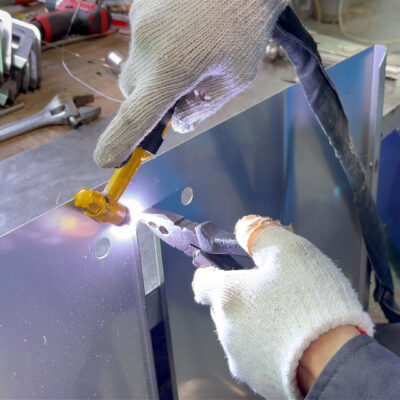
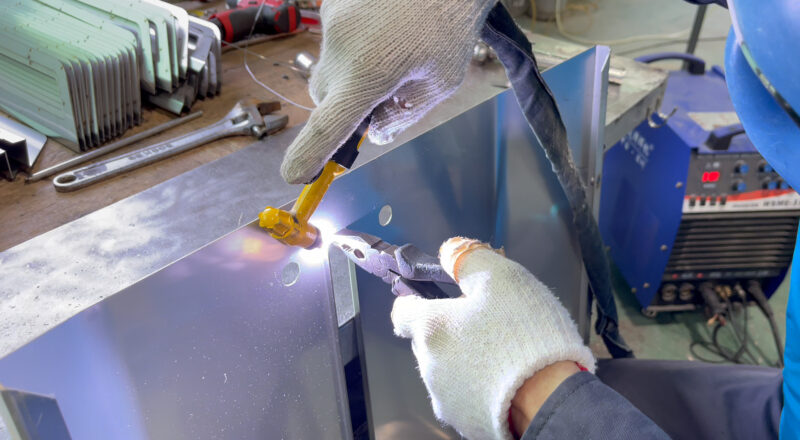
Where welds remain accessible, look for visible cracks, surface pores, undercut, excessive spatter and inconsistent joint shape. Welding inspection guidance recognizes these as relevant surface indications. However, the presence or acceptability of an indication must be judged against the applicable drawing and agreed acceptance criteria, rather than a photograph alone. TWI
If the cabinet will be coated, inspect the welded areas before coating where the production process allows. A coating can make a joint look uniform without showing the condition of the metal beneath it. The American Welding Society also highlights examination of weld appearance and cleanliness before coating application. Welding Digest – AWS
For formal visual examination of fusion welds, ISO 17637 describes a visual testing method. Refer to a standard or acceptance level in a purchase specification only if that standard actually applies to the product and has been agreed for the project. Visual testing of fusion-welded joints
On stainless steel cabinets, inspect the areas around welds for heat tint, contamination and an inconsistent finish. Ask how these areas are cleaned and finished after welding. Stainless steel industry guidance explains that post-fabrication surface treatment helps address weld discoloration and contamination and supports corrosion resistance. worldstainless
The finish around a weld should also match the agreed appearance as closely as the manufacturing method permits. For coastal installations, surface quality and maintenance deserve particular attention because poor fabrication and unsuitable finishes can contribute to visible staining. worldstainless
After brushing, polishing or coating, examine the cabinet from normal viewing distance and up close. Check that color, grain direction and texture are consistent across visible parts and between units in the same entrance.
Then inspect the assembled gate:
A final operational check should confirm that the assembled gate functions as specified. A good cabinet finish does not replace a functional test of the complete turnstile.
| Inspection point | What to check | Best reference |
| Material | Grade and thickness of specified components | Purchase order, material records, approved drawing |
| Dimensions | Cabinet size, openings and hole positions | Approved drawing and tolerances |
| Fabrication | Bends, edges, flatness and panel fit | Approved sample and drawing |
| Welding | Accessible joints and visible surface indications | Agreed welding and inspection criteria |
| Surface finish | Color, grain, weld-area finishing and consistency | Approved physical finish sample |
| Assembly | Covers, fasteners, glass mounts and service access | Assembly drawing |
| Operation | Gate movement, detection and specified functions | Product test procedure |
For a custom project or a larger order, request an approved drawing, finish sample and inspection record that identifies what was checked. If a particular test report or material certificate is required, include it in the purchase terms before production begins.
VELAXIZ can review cabinet materials, surface finish and project drawings with customers before production. Share your entrance layout and required gate configuration to discuss the manufacturing details.
Only partly. Photos may show visible surface issues, but they cannot establish material grade, verify dimensions or reveal all internal weld imperfections. Formal inspection requirements should be agreed for the project. Visual testing of fusion-welded joints
No. A smooth appearance does not by itself confirm the condition of the joint beneath the finished surface. Review the fabrication process and agreed inspection records when weld quality is critical.
Confirm the specified material, measure it against the drawing, inspect panel fit and accessible welds, and review the finish around welded areas. These checks address different issues and should be considered together.
No. The inspection scope should reflect the cabinet design, how its joints are made and the project’s agreed acceptance requirements. Avoid adding an inspection standard to a quotation unless the manufacturer and buyer have confirmed its applicability.