2026-09-29
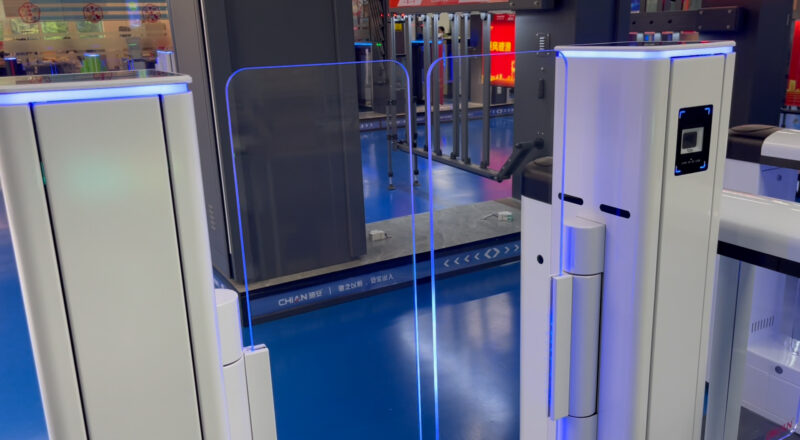
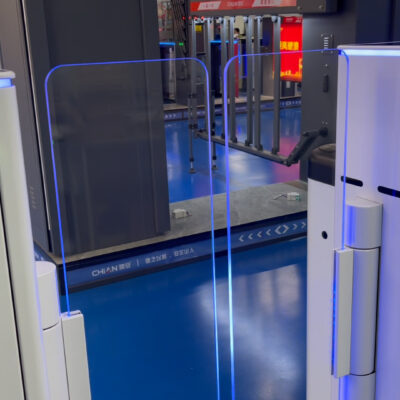
To choose the right turnstile glass panel, start with the gate model and intended use. Confirm the required passage width and barrier height, then review the glass construction, mounting method, user safety and replacement requirements. Glass thickness alone does not tell you whether a panel is suitable for a particular turnstile.
Glass barriers are common on swing gates and speed gates because they provide a physical boundary while keeping an entrance visually open. Yet a panel designed for a standard office lane may not be suitable for a wider accessible lane or a taller barrier.
First, establish whether the glass is a moving gate leaf or a fixed side panel. These parts have different dimensions, mounting points and operating requirements.
A moving leaf must work with the gate’s drive system and opening path. Its size and weight affect the complete gate configuration. A fixed panel forms part of the surrounding entrance layout and must be specified with its supports and installation details. Do not assume that two panels with similar dimensions are interchangeable.
Tempered, also called toughened, glass is widely used in entrance gates. It is stronger than ordinary glass of the same thickness and typically breaks into small fragments if it fails. Laminated glass uses an interlayer that helps hold broken pieces together. The appropriate choice depends on the gate design, mounting method and project requirements.
| Glass construction | Main characteristic | What to confirm |
| Tempered glass | Breaks into small fragments | Approved size, thickness, edge treatment and mounting for the gate model |
| Laminated glass | Interlayer helps retain fragments after breakage | Whether the gate design supports its construction, thickness and weight |
| Tempered laminated glass | Combines tempered plies with a retaining interlayer | Compatibility with the drive and mounting system |
Specify the complete glass assembly, rather than requesting “tempered glass” or “laminated glass” without dimensions and installation details.
Barrier height affects both the appearance and the physical separation provided by a turnstile. A lower glass leaf can preserve an open lobby design. A taller barrier may be preferred where the project calls for a stronger physical boundary.
There is no universal height that suits every entrance. Commercial speed gates are offered with different glass heights, which illustrates why height should be selected as part of the gate configuration rather than treated as a decorative detail. Gunnebo Entrance Control
When reviewing height, consider the surrounding partitions and whether someone could simply walk around the end of the gate. A tall panel on its own does not secure an entrance with an open side.
The clear passage width is the usable space between barriers when the gate is open. It should match the people and items expected to pass through the lane, including luggage, deliveries or mobility devices where applicable.
For a wider lane, check the complete gate configuration. A wider passage may require different leaf dimensions, cabinet spacing, mounting or drive arrangements. Published speed gate ranges show that standard and wide lanes can have different specifications. gunneboentrancecontrol.com
If accessibility is part of the project, confirm the applicable local requirements and the finished clear width on the installation drawing.
The glass panel is only one part of a safe passage. Ask the supplier to confirm:
Modern speed gates may combine glass barriers with passage detection and other safety features, but the exact functions vary by model and configuration. Request the specification for the gate being purchased. Gunnebo Entrance Control
Glass at a busy entrance will need regular cleaning. For long term service, also ask how a damaged panel is replaced. Confirm whether a replacement is available for the exact gate model and whether the supplier records the panel drawing, hole positions, finish and mounting details.
A practical purchase specification should include: gate model, glass construction, panel drawing, thickness, finished height, clear passage width, edge finish, mounting method and replacement part information.
For a typical office entrance, the priority may be a clean appearance and smooth passage. For a busy public venue, the review may focus more heavily on lane layout, user movement and maintainability. For a project requiring taller barriers or wider access, panel dimensions should be checked alongside the gate mechanism and site drawings.
VELAXIZ can review your entrance dimensions, expected users and access control requirements before recommending a glass barrier configuration. Share your layout drawing and project requirements to discuss a suitable gate and glass panel.
No. The correct thickness depends on the panel dimensions, glass construction, mounting and gate design. A thicker moving leaf also changes its weight. Use the manufacturer’s approved specification for the complete gate.
Tempered glass breaks into small fragments, while laminated glass has an interlayer that helps retain fragments after breakage. The choice should be made with the gate design and project safety requirements in mind. pilkington.com
Possibly, but the replacement must match the approved drawing and specification, including its dimensions, construction, edge work, holes and mounting details. Confirm compatibility with the gate supplier before installation.
A taller panel increases the physical boundary, but tailgating control also depends on passage detection, access settings and the surrounding entrance layout.