2024-11-12
When buyers compare pedestrian turnstiles, attention often goes first to the mechanism, sensors and access control functions. However, the sheet metal cabinet is just as important to the long-term performance of the gate.
The cabinet is not simply an exterior shell. It supports the mechanism, protects the controller and wiring, holds sensors and readers in position, and determines whether the finished turnstile remains stable after years of daily use. For this reason, sheet metal manufacturing quality directly affects structure, alignment, appearance and maintenance.
A pedestrian gate operates through repeated mechanical movement. Every opening and closing cycle creates vibration and load inside the cabinet. If the metal structure is too thin, poorly reinforced or inaccurately fabricated, small dimensional errors can gradually become larger alignment problems.
A strong cabinet helps keep the mechanism, barrier arms, sensors and access control components in their intended positions. This is especially important for speed gates and swing barrier turnstiles where barrier movement must remain smooth and symmetrical.
Different projects require different cabinet materials and finishes. Stainless steel is widely used because of its durability and corrosion resistance, while painted steel and aluminum-alloy components are also used for premium architectural designs.
The correct material depends on the installation environment, expected traffic, interior design, corrosion exposure and project budget. Material thickness also matters. The goal is not simply to use the thickest metal possible, but to achieve the required rigidity while maintaining a refined product profile.
Modern turnstile fabrication commonly uses CNC laser cutting to form the main cabinet panels and internal structural parts.
Accurate cutting improves the position of mounting holes, reader windows, access panels and structural joints. Better dimensional consistency also reduces the amount of correction needed during assembly.
For multi-lane projects, consistency becomes particularly important. If ten or twenty gates are installed side by side, small differences in cabinet height or panel alignment can become immediately visible.
Bending Accuracy Determines the Final Shape
After cutting, metal panels are formed through bending processes.
The bending angle, radius and sequence must be controlled carefully. Poor bending can create twisted panels, uneven gaps or misaligned top covers. These issues may look cosmetic at first, but they can also influence the position of internal components and the barrier mechanism.
A premium speed gate therefore requires both industrial strength and architectural precision.
Welding and Internal Reinforcement
The internal frame is responsible for structural stability.
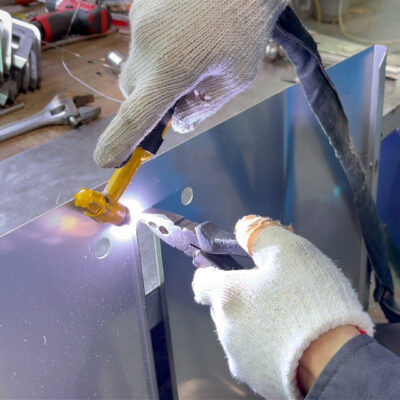
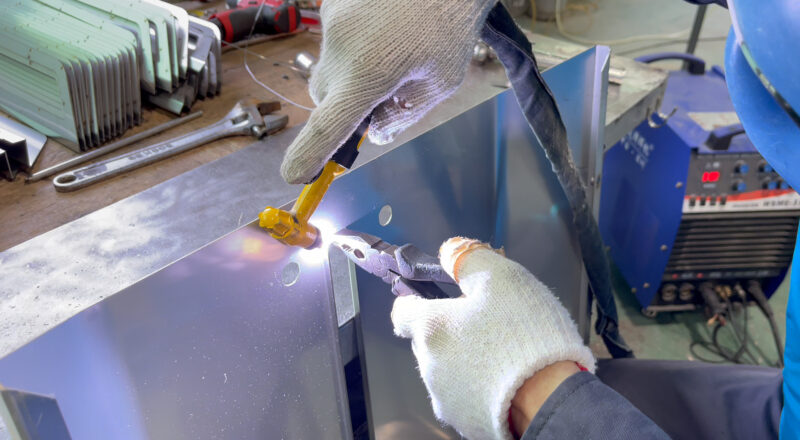
Welding points, reinforcement plates and mounting structures should be designed around the loads generated by the mechanism and barrier movement. Good welding should provide strength without creating excessive distortion that affects the outer cabinet.
After welding, important dimensions should be checked again before surface finishing and assembly.
Surface Treatment Protects More Than Appearance
Surface treatment defines both the visual finish and environmental resistance of a turnstile.
Depending on the product and project, processes may include brushing, polishing, powder coating, painting, anodizing or other protective finishes.
A stable surface process helps improve color consistency, scratch resistance and corrosion protection. For premium offices, hotels and commercial buildings, finish quality also determines whether the turnstile integrates naturally with surrounding architecture.
Why Manufacturing Tolerance Matters During Assembly
A turnstile combines mechanical, electrical and optical systems inside a relatively narrow cabinet.
If the cabinet dimensions are inconsistent, technicians may need to force-fit components during assembly. This can create stress, reduce serviceability and make future replacement more difficult.
Good sheet metal manufacturing reduces these risks by providing repeatable mounting positions for mechanisms, sensors, readers, wiring channels and control boards.
Quality Control Should Continue After Fabrication
Visual inspection alone is not enough.
A professional quality process should verify key dimensions, panel flatness, hole positions, welding quality, surface finish and assembly fit. The completed cabinet should then be checked again after the mechanism and electronic components are installed.
This creates a more consistent final product and reduces installation problems at the project site.
When evaluating a supplier, buyers can look beyond product photos and ask several practical questions:
What materials and thicknesses are used for the cabinet and internal frame? How are sheet metal parts cut and formed? How is cabinet consistency controlled across multiple units? What surface treatments are available? Can cabinet colors, reader windows or top covers be customized? How are completed cabinets inspected before assembly?
These questions provide a better understanding of manufacturing capability than appearance alone.
VELAXIZ Manufacturing Approach
VELAXIZ develops pedestrian access products for commercial buildings, corporate facilities, transportation environments, industrial sites and other controlled entrances. Our product development considers the complete relationship between cabinet structure, mechanism, sensing system and access control integration.
For project-specific requirements, cabinet finishes, colors, reader positions and selected structural details can be evaluated according to the entrance design and system architecture.
A reliable turnstile begins long before final assembly. It begins with accurate manufacturing of every structural component.
What is the best material for a turnstile cabinet? There is no single material that fits every project. Stainless steel is common for durability and corrosion resistance, while coated steel and aluminum-alloy components can support different architectural and performance requirements.
Why does sheet metal thickness matter? Thickness influences cabinet rigidity, vibration resistance and overall structural strength. The correct thickness should be selected together with the internal frame design.
Can turnstile cabinet colors be customized? Many commercial turnstile projects can support customized finishes or colors, subject to the selected model, quantity and manufacturing process.
Does cabinet quality affect the turnstile mechanism? Yes. Poor cabinet alignment can affect mechanism mounting, barrier alignment, sensors and long-term operation.
About VELAXIZ VELAXIZ specializes in pedestrian access control products including speed gates, swing barriers, flap barriers, tripod turnstiles, full-height turnstiles and integrated access solutions for global projects.