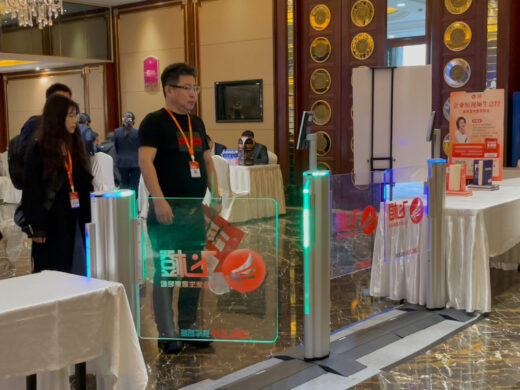
Different entrances require different ways of controlling pedestrian movement.
VELAXIZ supports custom passage modes and control logic for selected turnstiles and speed gates, allowing the gate behavior to be configured according to the actual access requirements of the project.
From one-way and two-way passage to controlled entry, free exit and emergency release, the turnstile logic can be adapted to different operating scenarios.
This helps system integrators create a passage process that matches the way people actually enter and leave the site.
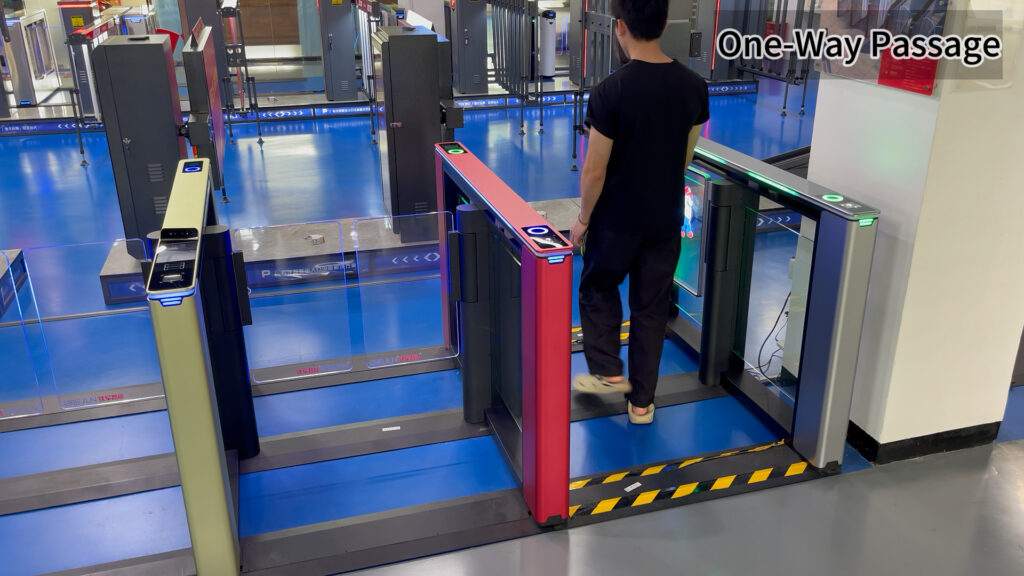
One-way passage allows pedestrians to move through the turnstile in only one permitted direction.
The opposite direction remains locked or unavailable.
This mode is suitable for entrances where pedestrian movement needs to follow a fixed route.
Typical applications include:
One-way operation can help create a more organized flow and reduce confusion in busy entrance areas.
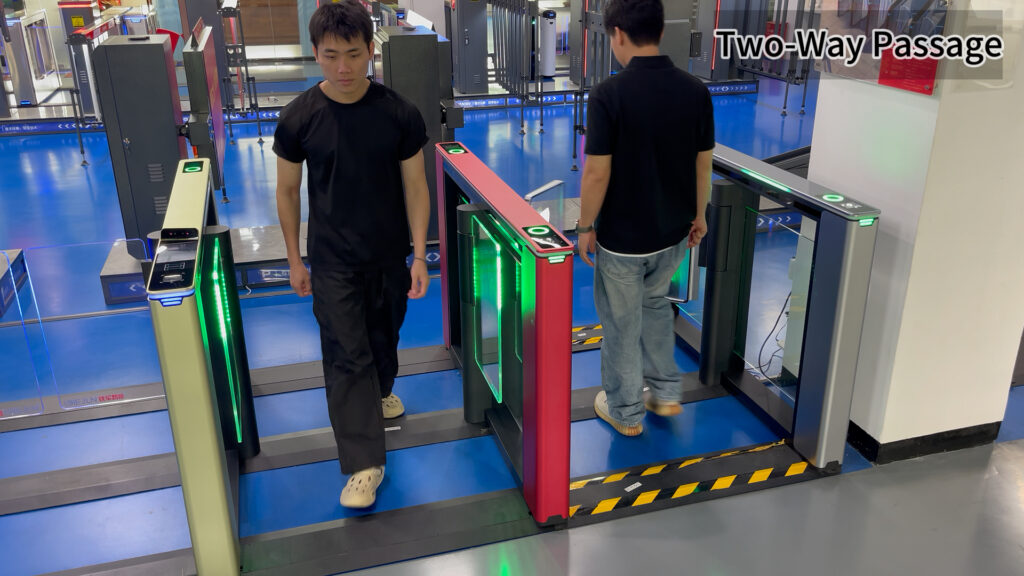
Two-way passage allows the same lane to support movement in both directions.
Pedestrians can enter or exit through the same turnstile according to the configured access logic.
This mode is useful where entrance space is limited or where the same passage needs to serve both incoming and outgoing traffic.
Typical applications include:
Bidirectional operation can help improve the flexibility of the entrance layout.
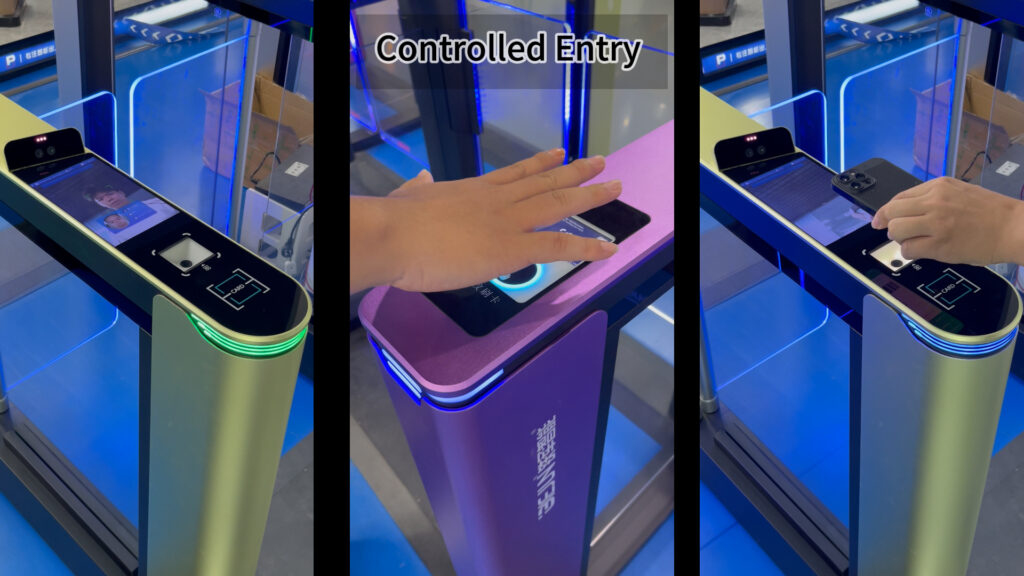
Some projects require authorization when entering but allow users to leave freely.
In this mode, the entrance direction remains controlled while the exit direction can operate without credential verification.
This configuration is commonly used in:
It provides access control where it is needed while allowing a more convenient exit process.
The opposite configuration can also be used.
Pedestrians may enter freely but require authorization before leaving.
This type of logic can be suitable for specific operational or security scenarios where exit movement needs to be recorded or controlled.
The exact configuration depends on the site management requirements.
For higher-control environments, both directions can require valid authorization.
Users must present an approved credential before entering or leaving through the turnstile.
This mode can be used where access records are required in both directions.
Typical applications include:
Bidirectional authorization can provide clearer records of pedestrian movement.
Free passage mode allows pedestrians to move through the lane without presenting an access credential.
Depending on the turnstile structure, the barrier may remain open or operate in a free-access state.
This mode can be used during:
The gate can later return to its normal controlled passage mode when required.
In normally closed mode, the barrier remains closed until valid authorization is received.
After access is approved, the gate opens and allows the pedestrian to pass.
Once passage is completed, the barrier returns to the closed position.
This is one of the most common operating modes for access-controlled turnstiles.
In normally open mode, the barrier remains open during normal operation.
The gate closes or blocks the passage only when an unauthorized or abnormal passage attempt is detected, depending on the control configuration.
This mode can support high-throughput environments where minimizing unnecessary barrier movement is important.
It can also create a more open passage experience during normal authorized traffic.
The gate can be configured with a defined passage time after authorization.
If the pedestrian does not enter the lane within the specified period, the access permission can expire and the gate returns to its normal state.
This helps prevent a valid authorization from remaining active indefinitely.
Timing logic can be adjusted according to the application and expected pedestrian behavior.
Some projects may require special logic for authorized group passage.
For example, one authorization may permit more than one person to pass under specific operating conditions.
This can be useful in applications involving:
The final logic depends on the project requirements and selected gate configuration.
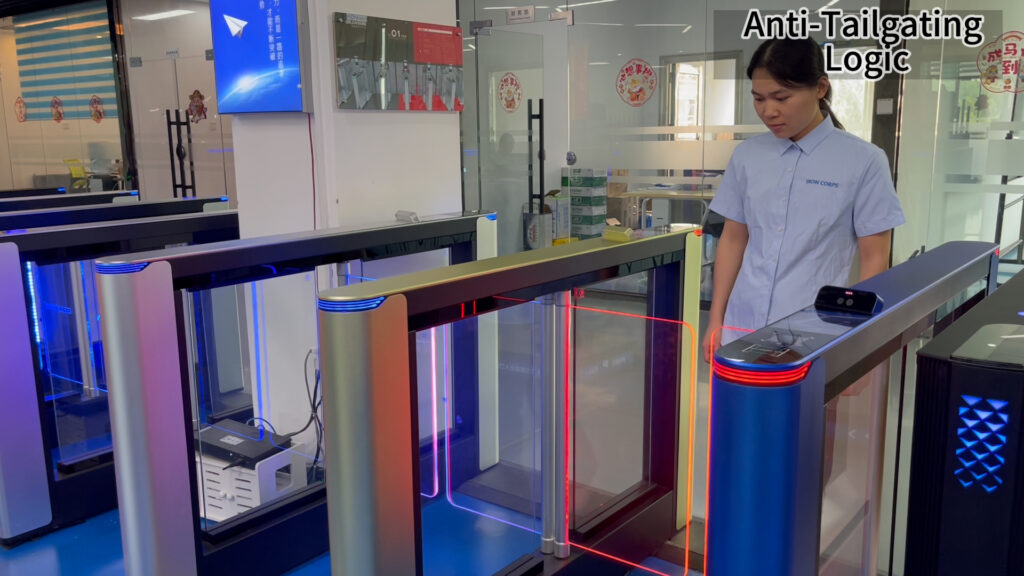
Custom control logic can also define how the turnstile responds when more than one person attempts to pass using a single authorization.
The gate can monitor the passage process and trigger an abnormal passage response when the configured logic detects unauthorized following behavior.
This type of control is useful in projects where one credential should correspond to one authorized passage.
The system can also be configured to respond when a pedestrian attempts to move in the opposite direction from the permitted flow.
Depending on the project logic, the gate may:
This helps maintain the intended direction of pedestrian flow.
In emergency situations, the turnstile operating logic can be configured to prioritize evacuation.
Depending on the model and system design, the barrier can be released or opened after receiving an emergency signal.
This helps create a clear passage route when normal access control should no longer restrict pedestrian movement.
Emergency behavior should always be coordinated with the overall site safety and evacuation design.
Some projects require different gate behavior at different times of the day.
For example:
Working Hours
Controlled entry and controlled exit.
Peak Periods
Controlled entry with free exit.
Visitor Hours
Selected lanes in free passage mode.
After Hours
Both directions fully controlled.
This allows the same turnstile installation to support different operating requirements without changing the physical gate layout.
There is no single passage mode that fits every entrance.
An office building may require controlled entry and free exit, while a secure facility may require authorization in both directions. A public entrance may use free passage during certain periods and controlled passage at other times.
VELAXIZ supports custom turnstile passage modes and control logic for selected pedestrian gates, helping system integrators configure the gate behavior according to real operating requirements.
Provide your required entry and exit logic, passage direction and operating scenarios, and our team can help evaluate a suitable configuration.
Yes. Selected turnstile models can support customized entry, exit and passage logic according to project requirements.
Yes. Bidirectional turnstiles can allow passage in both directions according to the configured control logic.
Yes. Controlled entry with free exit is a common passage configuration.
Yes. Selected turnstiles can operate in free passage or normally open modes according to the configured schedule or control logic.
Yes. Different operating modes can be used for working hours, peak periods, visitor periods or after-hours access.
Depending on the model and system configuration, the turnstile can respond to an emergency signal by releasing or opening the passage.
Selected turnstile systems can use configured control logic and detection functions to identify abnormal following or reverse-direction passage behavior.
If You Are interested in Our Products, please Leave Us A Message Below Along With Your Contact information.
We Will Get inTouch With You As Soon As Possible.Thank You!